By Elliot Morgan
Lures catch fish by imitating prey or triggering a reaction strike through movement, flash, vibration or sound. No lure works everywhere, and none guarantees a catch, but understanding what each type is designed to do helps you choose sensibly for the water and conditions you fish.
Lure types at a glance
| Lure | Depth | How it attracts fish | Common conditions |
|---|---|---|---|
| Soft plastics | Any, depending on rig | Realistic shape and slow movement | Very versatile; finesse to heavy cover |
| Crankbaits | Shallow to deep (by lip) | Wobble and vibration | Covering water, structure |
| Spinnerbaits | Shallow to mid | Blade flash and vibration | Stained water, around cover |
| Jigs | Bottom to mid | Hopping or dragging motion | Bottom structure, cover |
| Topwater | Surface | Surface disturbance and sound | Low light, calm water |
| Spoons | Variable | Wobble and flash | Casting, trolling, jigging |
| Inline spinners | Shallow to mid | Spinning blade flash and vibration | Streams, trout, panfish |
| Swimbaits | Variable | Lifelike swimming action | Imitating baitfish |
Soft plastics
Worms, creature baits, grubs, minnows and more, made from soft plastic. They are rigged on hooks or jig heads in many ways, such as Texas rigs (weedless), wacky rigs, drop shots and jig heads. Their versatility makes them a staple for bass and many other species. See Hook Sizes and Types for worm hooks.
Crankbaits
Hard-bodied lures with a lip that makes them dive and wobble when retrieved. The size and angle of the lip largely decide how deep they run; manufacturers usually state a running depth range. Crankbaits are good for covering water quickly. A moderate-action rod helps keep treble hooks pinned. See Rod Power and Action.
Spinnerbaits
A wire frame with one or more spinning blades above a skirted hook. The design deflects off cover, and blades create flash and vibration that can help in stained water.
Jigs
A weighted head molded onto a hook, often with a skirt or a soft plastic trailer. Jigs are worked along the bottom or through cover with hops, drags and pauses. They range from tiny crappie jigs to heavy bass jigs.
Topwater lures
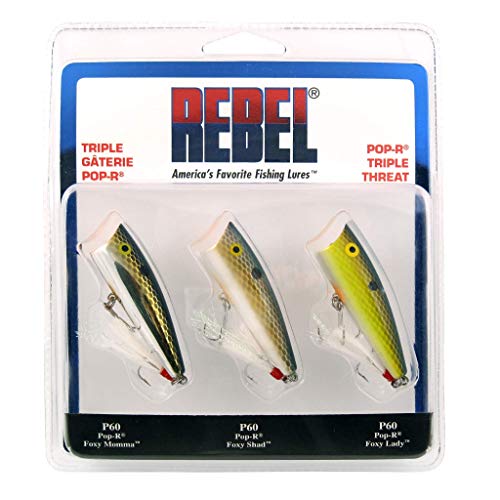
Poppers, walking baits, prop baits and buzzbaits that move on the surface. Anglers often use them in low light and calm conditions. Wait until you feel the fish’s weight before setting the hook, since surface strikes can miss.
Spoons
Curved metal lures that wobble and flash. Casting spoons, trolling spoons and jigging spoons are used in fresh and salt water, from trout to inshore species.
Inline spinners
A spinning blade on a wire shaft with a weighted body. Simple to use, they are popular for trout, panfish and many stream species. They can twist line; a swivel helps.
Swimbaits
Soft or hard lures shaped and designed to swim like baitfish. They range from small paddle-tail soft baits to large, jointed hard baits.
Choosing lures for conditions
- Water clarity: many anglers use natural colors in clear water and brighter or darker, high-contrast colors in stained water.
- Depth: choose a lure that reaches the depth fish are holding.
- Cover: weedless soft plastics, jigs and spinnerbaits handle vegetation and wood better than open-hook lures.
- Forage: match the size and shape of local baitfish, crawfish or insects.
- Regulations: some waters restrict lure types, hook types or the number of hooks.
A starter selection
For general freshwater fishing, a handful of soft plastics with hooks and jig heads, a small crankbait, a spinnerbait, an inline spinner and a topwater lure cover many situations. Add more as you learn your local waters.
Frequently asked questions
What is the most versatile lure?
Soft plastics are often considered the most versatile because they can be rigged for almost any depth and condition.
Do lure colors matter?
Many anglers believe color matters most in relation to water clarity and light. Size, depth and action are usually more important.
Related guides

About Elliot Morgan
Elliot researches and writes buying guides and how-to articles on beginner & family fishing. Picks are based on product specifications, brand reputation and patterns in owner feedback, and are updated as new models come out.