 By Miles Sinclair
Updated November 2026
Trout fishing for beginners UK anglers can start with the right reading material, and that is what this list covers. Trout are often the first species new fishers pursue, but the learning curve is real: presentation, line control, knots and reading water all take practice. The seven picks below were chosen on specification details, publisher reputation and the kinds of feedback owners commonly report. Each one approaches the subject from a different angle, so you can match the book to how you like to learn.
Best overall: Trout Fishing Made Simple – View on Amazon
Best for bait anglers: The No-BS Trout Fishing Guide for Beginners – View on Amazon
Best for fast fly fishing basics: Fly Fishing: A Beginner’s Guide – View on Amazon
Best for practical tips: The Orvis Guide to Beginning Fly Fishing – View on Amazon
Best for knots and reading water: The Absolute Beginner’s Guide to Fly Fishing – View on Amazon
Best general fishing primer: Basic Fishing: A Beginner’s Guide – View on Amazon
Best fly selection pick: Fly Fishing Flies Assortment Kit – View on Amazon
Our Top Picks
Trout Fishing Made Simple: The Beginner’s Guide to Finding and Catching Trout Without Expensive Gear

Trout Fishing Made Simple: The Beginner's Guide to Finding and Catching Trout Without Expensive Gear
Best for: Anglers who want to catch trout with inexpensive, widely available equipment.
This guide suits someone who has never cast for trout and wants a clear route from the bank to the first fish. It focuses on locating trout and keeping costs and complexity low.
Key specs:
- Covers finding trout in still and moving water
- Explains setups using standard gear
Pros:
- Plain, approachable language
- Focuses on finding fish
- Useful for first trips
Cons:
- Limited advanced technique
- Light on fly-specific detail
Bottom line: A strong first read for a beginner who wants to get out and catch something soon.
The No-BS Trout Fishing Guide for Beginners: Simple Baits, Easy Setups, and Proven Spots for Catching Trout

The No-BS Trout Fishing Guide for Beginners: Simple Baits, Easy Setups, and Proven Spots for Catching Trout Without the Confusion (No-BS Fishing Series)
Best for: Bait anglers who prefer simple, direct advice.
Readers who want to start with worms, small baits or spinners will find this guide practical. It keeps setups and spot selection uncomplicated.
Key specs:
- Covers simple bait rigs
- Explains proven types of trout water
Pros:
- Direct, no-nonsense style
- Easy bait setups
- Good for beginners on a budget
Cons:
- Little on fly fishing
- Brief on advanced tactics
Bottom line: Suited to anyone who wants a fast, simple start with bait.
Fly Fishing: A Beginner’s Guide to Mastering Fly Fishing for Beginners in 1 Day or Less!

Fly Fishing: A Beginner's Guide to Mastering Fly Fishing for Beginners in 1 Day or Less! (Fly Fishing – Fly Fishing for Beginners – Fishing – How to … – Trout Fishing for Beginners – Fishing Tips)
Best for: Readers who want a short introduction to fly fishing.
This title is aimed at a quick overview. It suits a reader testing whether fly fishing appeals before investing in more detailed material.
Key specs:
- Short-format beginner guide
- Covers core fly fishing concepts
Pros:
- Quick to read
- Clear overview of basics
- Low commitment
Cons:
- Limited depth
- Promises more than a short read delivers
Bottom line: A useful quick primer before moving on to fuller guides.
The Orvis Guide to Beginning Fly Fishing: 101 Tips for the Absolute Beginner

The Orvis Guide to Beginning Fly Fishing: 101 Tips for the Absolute Beginner
Best for: Beginners who want practical tips from an established fly fishing name.
Orvis is a long-established fly fishing brand, and this book is organised as short, digestible tips. It works well for dipping in and out between outings.
Key specs:
- 101 short tips in list format
- Covers casting and general etiquette
Pros:
- Easy to scan
- Reputable publisher
- Practical focus
Cons:
- Tips can feel disconnected
- Less structured as a course
Bottom line: Good for beginners who like practical, bite-sized advice.
The Absolute Beginner’s Guide to Fly Fishing: Tips, Lessons, and Techniques for Tying Knots, Reading the Water
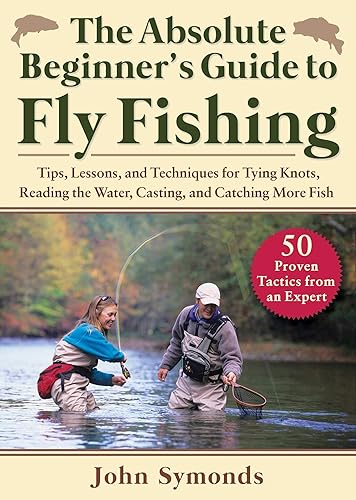
The Absolute Beginner's Guide to Fly Fishing: Tips, Lessons, and Techniques for Tying Knots, Reading the Water, Casting, and Catching More Fish—50 Proven Tactics from an Expert
Best for: Anglers who want to build core skills such as knots and reading water.
The title points to knot tying and water reading, two skills that matter on UK trout streams and stillwaters. It suits a learner who wants structured lessons.
Key specs:
- Covers knot tying
- Explains reading water
Pros:
- Good coverage of fundamentals
- Structured lessons
- Relevant to river and lake fishing
Cons:
- Fly-focused throughout
- Some techniques need practice
Bottom line: A sound choice for building fundamentals before heading out.
Basic Fishing: A Beginner’s Guide

Basic Fishing: A Beginner's Guide
Best for: Complete newcomers who want general angling knowledge.
This guide covers fishing in general rather than trout alone, which helps if you are not yet sure which species to target. The principles carry over to trout.
Key specs:
- General coverage of freshwater angling
- Basic gear and technique overview
Pros:
- Broad introduction
- Accessible for total beginners
- Useful foundation
Cons:
- Not trout-specific
- Limited depth on any one method
Bottom line: Ideal as a general starting point before specialising.
Fly Fishing Flies Assortment Kit Dry Wet Nymphs Tenkara Popper Streamer Woolly Bugger for Trout Bass Salmon

Fly Fishing Flies Assortment Kit Dry Wet Nyphms Tenkara Popper Streamer Woolly Bugger for Trout Bass Salmon Steelhead with Fly Box (100PCS Fishing Flies Kit)
Best for: Beginners who want a range of flies to experiment with on trout water.
An assortment kit lets a new angler try dry flies, wet flies, nymphs and streamers without buying each pattern separately. It is a practical add-on once you have a rod and line.
Key specs:
- Mixed assortment of dry, wet and nymph patterns
- Includes streamer and popper styles
Pros:
- Good variety for experimenting
- Covers several fly types
- Useful for trout and other species
Cons:
- Patterns may need tuning for UK waters
- Not a complete setup on its own
Bottom line: A handy fly selection for a beginner who already owns the basic tackle.
Quick Comparison
| Product | Best for | Key feature |
|---|---|---|
| Trout Fishing Made Simple | Finding trout with simple gear | Locating fish |
| The No-BS Trout Fishing Guide for Beginners | Bait anglers | Simple bait setups |
| Fly Fishing: A Beginner’s Guide | Quick fly fishing overview | Short format |
| The Orvis Guide to Beginning Fly Fishing | Practical tips | 101 short tips |
| The Absolute Beginner’s Guide to Fly Fishing | Core skills | Knots and water reading |
| Basic Fishing: A Beginner’s Guide | General angling | Broad introduction |
| Fly Fishing Flies Assortment Kit | Experimenting with flies | Mixed patterns |
Buying Guide
Choose Between Bait and Fly Fishing
Decide early which method interests you, because it shapes the gear and the reading you need. Bait fishing is usually simpler to start with, while fly fishing rewards patience and technique. Pick guides that match the method you plan to use first.
Good picks for this: The No-BS Trout Fishing Guide for Beginners, Fly Fishing: A Beginner’s Guide
Look for Clear Knot and Rig Instructions
Knots and rigs are where many beginners lose fish. Look for guides that show each knot step by step and explain why it works. Good instruction should also cover how to check a knot before casting.
Good picks for this: The Absolute Beginner’s Guide to Fly Fishing, Basic Fishing: A Beginner’s Guide
Consider Reading Water and Locating Fish
Trout hold in predictable places such as seams, undercut banks and the tails of pools. A guide that teaches you to read the current and spot likely lies will save many fruitless hours. This skill matters as much as any piece of kit.
Good picks for this: Trout Fishing Made Simple, The Absolute Beginner’s Guide to Fly Fishing
Match Fly Patterns to Conditions
A fly assortment is useful only if you understand when to use each type. Dry flies work on the surface, nymphs sit lower in the water, and streamers imitate larger prey. Start with a few patterns and learn their behaviour.
Good picks for this: Fly Fishing Flies Assortment Kit, The Orvis Guide to Beginning Fly Fishing
Check Whether the Book Suits Your Learning Style
Some readers prefer long, structured lessons, while others want short tips they can check on the bank. Think about how you learn best before buying. A mix of a quick primer and one fuller guide often works well.
Good picks for this: Fly Fishing: A Beginner’s Guide, The Orvis Guide to Beginning Fly Fishing
FAQ
Do I need fly fishing gear to start trout fishing?
No. Many beginners start with bait or spinning gear because it is simpler to learn. Fly fishing can come later once you understand how trout behave and where they feed.
Which skill should a beginner learn first?
Learning basic knots and how to read the water usually pays off fastest. Secure knots prevent lost fish, and knowing where trout lie improves your catch rate from the first session.
Are general fishing books useful for trout?
Yes, the core principles of line control, presentation and water reading carry over. Trout-specific detail is worth adding later, particularly for UK river and stillwater conditions.
How many flies do I need to begin?
A small, well-chosen selection is enough. Focus on a few dry, wet and nymph patterns and learn when each works rather than buying a large box at once.
Should I check local rules before fishing?
Yes. Permits, closed seasons and catch limits vary across the UK, so confirm the rules for your water with the fishery or the relevant authority before you go.
Conclusion
For a first book, Trout Fishing Made Simple suits anyone who wants to find and catch trout quickly. Bait anglers will prefer The No-BS Trout Fishing Guide, while fly fishers will get more from The Absolute Beginner’s Guide to Fly Fishing or The Orvis Guide. Pair your reading with a practical setup from our Trout Fishing Setup for Beginners: Rod, Reel, Line and Rig Step by Step guide, and choose the book that matches the way you want to learn.
Sources
- Rules, licences and closed seasons for freshwater angling in England and Wales
- Guidance on fishing and river conservation in England
Before you buy: helpful guides
Related reading
- Top 7 Trout Fishing Lure Kit Picks Compared for Beginners
- Top 7 Fishing Equipment for Beginners UK: Our Picks Compared
- Top 5 Trout Fishing Starter Kit Picks for Beginners Compared
About Miles Sinclair
Miles Sinclair is part of our editorial team and reviews and edits our beginner & family fishing guides, checking product details against manufacturer specifications and owner feedback.







