By Spencer Hollis
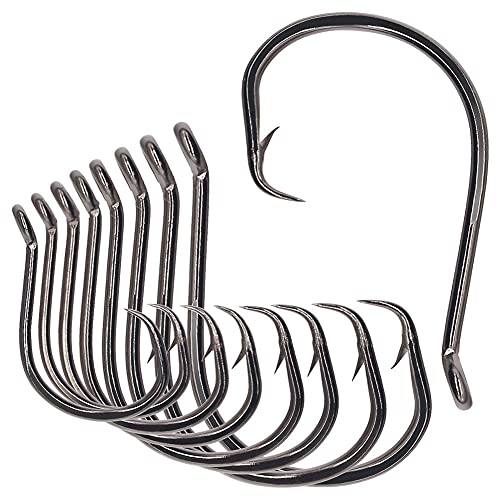
Fishing hook sizes follow a numbering system that can seem backwards at first. Smaller numbers indicate larger hooks, while larger numbers indicate smaller hooks. According to the Minnesota DNR’s tackle guide, hooks in sizes 10, 8, and 6 work well for smaller-mouthed fish such as panfish and stream trout. As the numbers decrease, the hook gets bigger. Size 2, 1, and then the system flips to aught sizes, written with a slash and zero. The same guide lists 1/0 as a larger hook suited for fish such as largemouth bass, walleye, northern pike, and muskellunge. In that list, 1/0 is the largest size, bigger than size 1.
Common Hook Types and How They Work
Hooks come in several distinct shapes, and each type behaves differently when a fish takes the bait. The North Carolina Division of Marine Fisheries rigging guide lists circle hooks, J-hooks, treble hooks, Kahle hooks, and jig hooks as common options. Understanding how each works helps you pick the right one for your bait, your target species, and whether you plan to keep or release the fish.
J-Hooks
The J-hook is the traditional shape, listed alongside circle and treble hooks by the North Carolina Division of Marine Fisheries. The New York State Department of Environmental Conservation (DEC) contrasts it with the circle hook: a circle hook is designed to slide out of the throat if swallowed and hook the lip or mouth, while a traditional J-hook is less likely to slide out of the stomach. For sharks, the DEC adds that J-hooks are more likely to be swallowed and damage internal organs.
Circle Hooks
Circle hooks are shaped so the point turns perpendicularly back toward the shank. The New York DEC describes a non-offset or in-line circle hook as one where the point and barb are in the same plane as the shank. The Minnesota DNR guide explains that circle hooks are designed to hook fish in the mouth as the fish bites down and turns away, and that they are self-setting: you do not jerk the rod to set the hook. Instead, the DEC advises pointing the rod tip at the fish, reeling steadily, and waiting until the line comes tight before slowly raising the rod tip. The Florida Fish and Wildlife Conservation Commission (FWC) states that circle hooks are best used with natural bait and are 90 percent more likely to hook a fish in the mouth rather than in the esophagus or stomach.
Treble Hooks
A treble hook is a single shank that splits into three points. The Florida FWC suggests avoiding multi-hook rigs or lures when you plan to release fish; if you have a treble hook, you can remove some of the hooks and flatten the barbs to make unhooking easier. The New York DEC’s Trade a Treble program encourages striped bass anglers to swap the back treble hook on plugs for a single inline hook or a bucktail flag to cut down on foul hooking and handling time.
Barbless Hooks
Any hook can become barbless by pinching the barb down with needlenosed pliers. The Minnesota DNR guide notes that many catch-and-release anglers flatten the barb to reduce the chance of a hook getting caught deep and to make removal easier. The Florida FWC says catch rates between barbed and barbless hooks are not significantly different, and it encourages barbless or crimped barbs to make release easier.
When Circle Hooks Are Required or Recommended
Several states now require circle hooks in specific saltwater situations. The New York DEC requires anglers to use circle hooks when fishing for striped bass with bait, defined as any whole or part of a marine or aquatic organism or terrestrial invertebrate, live or dead. Circle hooks are not required when fishing with an artificial lure, even if the lure is tipped with bait. New York state law and federal regulations also require non-stainless steel, non-offset circle hooks when using baited hooks for sharks, in both state and federal waters and for all tournament anglers. The Florida FWC notes that circle hooks are required in some areas and directs anglers to check local gear requirements.
Beyond legal requirements, both the New York DEC and Florida FWC recommend circle hooks as a conservation practice because they reduce deep hooking and increase the survival of released fish. The Minnesota DNR guide adds that circle hooks are particularly good for beginners since they do not require a traditional hook set.
Matching Hook Size to Bait and Fish
The Minnesota DNR tackle guide states the core principle clearly: hooks need to be large enough to hold the bait but small enough to fit in the fish’s mouth. A sunfish has a small mouth, so a small hook with a small bait such as a wax worm works well. A northern pike has a much larger mouth and eats other fish, so a larger hook with a minnow is a better choice. The guide’s fish tackle cards give specific starting points: sunfish at size 10, yellow perch at size 8, crappies and stream trout at size 6, bullheads and walleye at size 2, smallmouth bass at size 1, and largemouth bass, catfish, northern pike, and muskellunge at 1/0 or larger.
Shank length also matters. The Minnesota DNR guide explains that hooks have a short or long shank (the part between the bend and the eye) and recommends a long shank hook for chunky baits such as night crawlers.
The North Carolina Division of Marine Fisheries bottom rig and flounder rig descriptions show that hook choice depends on the bait and target. A red drum rig, for example, calls for a 4/0 or larger circle hook with live or cut mullet, while a spec rig uses small bucktail lures for spotted seatrout and gray trout.
Comparison Table: Hook Types at a Glance
| Hook Type | How It Works | Notes |
|---|---|---|
| J-hook | Traditional hook shape. | Less likely than a circle hook to slide out of the stomach if swallowed, per the New York DEC. |
| Circle hook | Point turns perpendicularly toward the shank; self-setting, no jerk required. | Required for striped bass with bait in New York and for sharks with bait in state and federal waters, per the New York DEC. |
| Treble hook | Three points on one shank; common on artificial lures. | The FWC suggests removing some hooks and flattening barbs for release. New York DEC runs a Trade a Treble program for striped bass plugs. |
| Barbless hook | A hook with the barb pinched or filed down. | Catch rates similar to barbed hooks, per the Florida FWC; easier to remove, per the Minnesota DNR. |
| Kahle hook | Listed among common hook types by the North Carolina Division of Marine Fisheries. | Check how it is used in the rig you are copying. |
Tools and Practices for Safe Release
Several agencies emphasize having the right tools ready before you land a fish. The Minnesota DNR guide recommends needlenosed pliers or long-handled forceps to gently remove a hook while keeping fingers away from sharp teeth. The Florida FWC describes dehooking tools that allow an angler to release a fish quickly without re-engaging the hook, and notes that even a pair of needle nose pliers counts as a dehooking tool. The New York DEC advises having all tools ready before landing a fish to minimize time out of water, and using a knotless or rubber-coated landing net to reduce slime and scale removal.
If a fish is gut hooked, the consistent advice across sources is to cut the leader as close to the hook as possible and leave the hook in place. The Minnesota DNR guide warns that forcibly removing a swallowed hook can tear tissues and cause fatal injuries. The New York DEC and Florida FWC both recommend cutting the line close to the hook and letting the fish go. The Florida FWC adds that non-stainless steel hooks will rust and deteriorate over time if left in a fish, while stainless steel or plated hooks persist much longer.
Hook Care and Storage
The Minnesota DNR guide suggests storing hooks organized by size in small containers such as clear film canisters, or hooked into a piece of foam or cork inside the tackle box. A hook sharpener keeps hooks effective, making them easier to push through bait and more likely to penetrate a fish’s mouth. After a trip, the guide recommends drying tackle so lures and hooks do not rust, and leaving the tackle box lid open for a few days to promote drying. This also helps prevent the spread of aquatic invasive species that may have hitched a ride on wet gear.
Fishing rules, including hook requirements, licenses, gear restrictions, and size and bag limits, vary by state and by water body. Always check the regulations from your state wildlife or marine fisheries agency before heading out.
Frequently asked questions
Do I need to set the hook with a circle hook?
No. According to the New York DEC, you should point the rod tip at the fish, reel steadily, and let the line come tight. The Minnesota DNR guide describes circle hooks as self-setting because the hook catches the corner of the mouth as the fish turns away.
What hook size should I start with for bass?
The Minnesota DNR fish tackle cards list size 1 for smallmouth bass and size 1/0 for largemouth bass when using live bait. The exact size depends on the bait you are using and the size of the bass in your water.
Are barbless hooks harder to keep fish on?
The Florida FWC states that catch rates using barbed versus barbless hooks are not significantly different. The main advantage of barbless hooks is that they are easier and faster to remove from the fish, which improves survival when you are releasing your catch.
For more on hooks, sinkers, swivels, and rigging, see our Hooks & Terminal Tackle section, plus common fishing rigs, hook removal tools, essential fishing tools and swivels and snaps.
Sources
- Minnesota DNR MinnAqua: Tackling Your Tackle Box
- New York State DEC: Best Practices for Saltwater Fishing
- Florida FWC: Fish Handling and Gear
- North Carolina Division of Marine Fisheries: Hooks, Lines and Sinkers
- Missouri Department of Conservation: Rigging Your Pole

About Spencer Hollis
Spencer puts together our beginner & family fishing guides, digging through specifications, manufacturer details and owner reviews so you don't have to.