 By Miles Sinclair
Updated November 2026
Saltwater fishing gear for beginners doesn’t have to be complicated. With a medium-power spinning rod, a matching reel, the right line, a few basic terminal tackle items and a handful of tools, you can rig up and catch fish from a pier, jetty or dock on your first outing. This guide covers what to buy, how to set it up and what to avoid.
Start With a Rod and Reel Matched for Saltwater
For most beginners, a spinning combo is the easiest choice. Look for a rod in the 7-foot range with medium power and fast action, which handles a wide range of inshore species like redfish, snapper, flounder and sea trout. Saltwater reels should be labeled corrosion-resistant or sealed, since salt residue wrecks bearings quickly. A reel in the 3000 to 4000 size class pairs well with that rod.
Shopping for one? See our guide: Jarvis Creek Park Fishing Dock: 7 Best Gear Picks for Beginners (2026).
Choose the Right Line and Leader
Braided line gives you thin diameter, good sensitivity and strength, but it needs a leader if you’re fishing near rocks, pilings or toothy species. A simple setup:
- Spool 10- to 20-pound braid on the reel.
- Tie a fluorocarbon leader of 15- to 30-pound test using a double uni knot or a improved clinch knot.
- Keep the leader about 2 to 3 feet long so you can retie quickly after a bite-off.
If you’d rather skip knots for now, a straight monofilament line in the 12- to 15-pound range is forgiving and easy to handle. For a step-by-step look at rigging from a dock, see Saltwater Fishing Off a Dock: A Step-by-Step Guide for Beginners.
Stock Basic Terminal Tackle
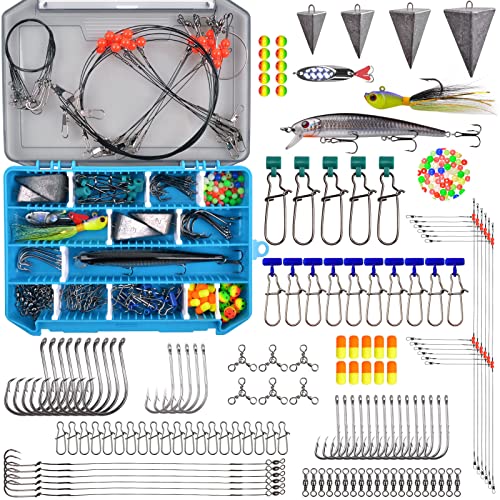
You don’t need a tackle box full of items. Focus on the components that cover most situations:
- Hooks in sizes 1/0 to 3/0 with circle or J-style bends
- Egg sinkers or pyramid sinkers in 1/2 to 1 ounce
- Swivels and snap swivels to prevent line twist
- Bobbers or popping corks for suspending bait
- Assorted soft-plastic jigs or a few metal spoons for casting
Simple rigs like a fish-finder rig or a basic bottom rig handle most of what you’ll encounter. For ideas you can tie at home, check Saltwater Dock Fishing Rigs: 7 Setups Beginners Can Tie Today.
Add the Tools You’ll Use Every Trip
A few inexpensive tools make the day safer and more comfortable:
- Pliers or hemostats for removing hooks
- Line cutters or nail clippers
- A fish-gripping tool or rubber-coated gloves for handling
- A cooler with ice if you plan to keep fish
- A small bag or tackle box to keep everything organized
Check local regulations for size and bag limits, and confirm licensing requirements with your state’s official fisheries website, since rules vary by location and change over time.
Recommended gear
- Spinning combo rated for saltwater: A matched rod and reel designed for salt is the single most useful purchase for a beginner. View on Amazon
- Fluorocarbon leader material: It resists abrasion near structure and is nearly invisible underwater. View on Amazon
- Stainless steel pliers: Corrosion-resistant tools hold up far better than standard steel in salt air. View on Amazon
Common Mistakes
- Buying freshwater gear and expecting it to survive salt. Always rinse everything with fresh water after each trip.
- Using line that’s too light for the species near structure, which leads to frequent break-offs.
- Overspooling the reel. Leave about an eighth of an inch below the spool lip.
- Forgetting a leader when fishing around rocks, pilings or oysters.
- Skipping a basic checklist and arriving without pliers or hooks.
FAQ
What is the best rod length for saltwater beginners?
A 7-foot medium-power spinning rod is a versatile starting point for most inshore saltwater fishing from docks, jetties and surf.
Do I need braided line or monofilament?
Monofilament is more forgiving and easier to handle for beginners. Braid works well once you’re comfortable adding a leader.
How do I keep my saltwater gear from corroding?
Rinse rods, reels and tools with fresh water after every trip, let them dry fully, and store them away from direct salt spray.
Conclusion
A matched spinning combo, a fluorocarbon or mono line, a small set of hooks and sinkers, and a few essential tools cover most beginner saltwater trips. Keep your gear rinsed and organized, and build from there as you learn which species show up where you fish. Confirm licensing and regulations with your state’s official source before you head out.
Related reading
- Saltwater Dock Fishing Tips: 6 Best Rod Tip Repair Kits for Beginners (2026)
- Magnet Fishing Boat Dock Gear: 3 Best Picks for Beginners (2026)
Ready to choose one?
About Miles Sinclair
Miles Sinclair is part of our editorial team and reviews and edits our beginner & family fishing guides, checking product details against manufacturer specifications and owner feedback.




Write Your Review
No reviews yet. Be the first to share your experience!